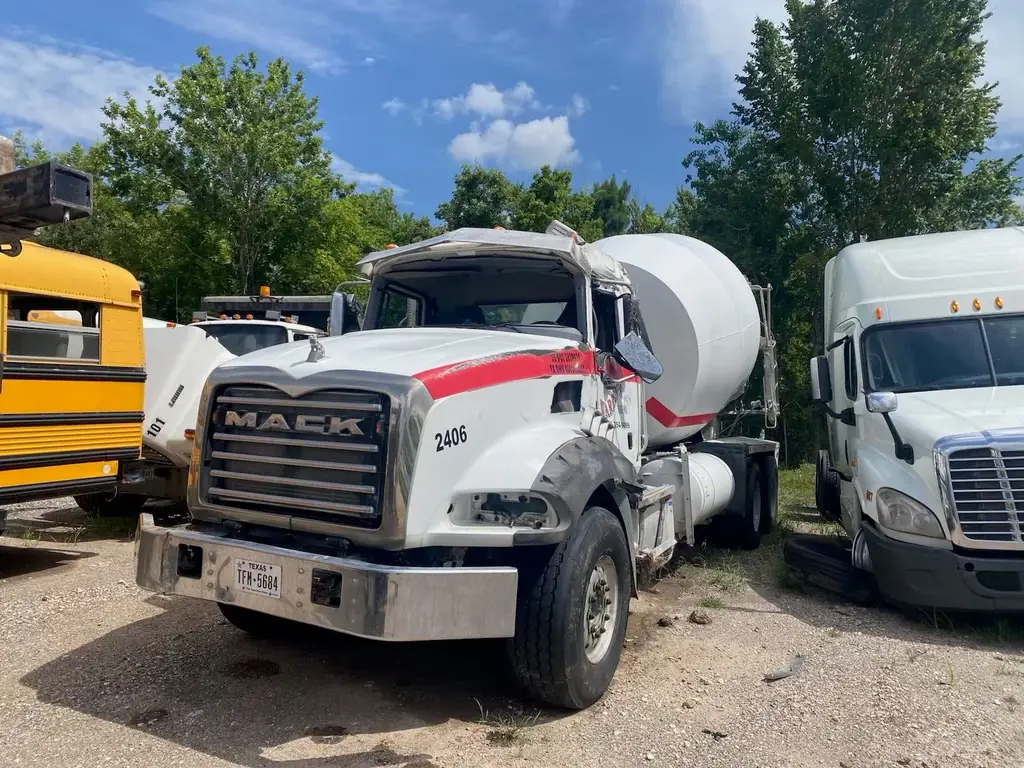
A loaded trailer on its side blocks lanes, bleeds fuel, and starts costing money the minute it stops moving. Our rotator crew uprights overturned semis, tankers, dump trucks, and buses across Houston with one setup, controlled lifts, and a photo record that holds up with the carrier, the shipper, and the adjuster.
Why uprighting with a rotator protects the equipment
Dragging a trailer upright with a straight pull twists the frame, scrapes the roof and rails, and dumps the cargo. A rotator lifts from above and to the side with two winch lines, so the trailer comes up on its own axis and sets down on its wheels. Tractors are separated or supported so the fifth wheel and frame are not loaded the wrong way. The difference shows up on the repair estimate and on how much freight is still sellable afterward.
What happens on a rollover scene
Stabilize and assess
We check for leaks, secure the scene with law enforcement, and confirm the load, the weight, and what the trailer is made of before anyone rigs anything.
Cargo decision
Some loads can be uprighted in place. Others have to be transferred first so the trailer comes up light. We tell you which one it is and why.
Controlled lift
Rigging is set for a slow, controlled roll with the rotator holding the load the whole way, not a snatch.
Clear, tow, document
Once the unit is on its wheels we tow it, sweep the debris, and deliver the invoice and photo file to whoever is paying the claim.
Tankers, reefers, and specialty trailers
Loaded tankers are uprighted only after product is transferred by a licensed hauler, and we coordinate that call for you. Refrigerated trailers are handled to keep the unit and the product recoverable where possible. Flatbeds with shifted steel, pipe, or lumber are re-secured or off-loaded before the lift. Every one of these decisions is made with you and the adjuster on the phone, not after the fact.
Houston freeways we clear the most
Rollovers cluster on the same ramps and curves: the I-10 and Beltway 8 interchanges, the I-45 Gulf Freeway curves through Pearland and League City, the I-69 Eastex ramps, the 610 Loop at the Ship Channel bridge, and the SH-225 and SH-146 corridors in the refinery district. We know which shoulders are wide enough to work from and where the closures will land, which shortens the time your equipment is on the ground.
On the job
What dispatch will ask you
- Location, direction, and whether lanes are blocked
- Trailer type and cargo, and whether the load is hazmat or perishable
- Whether the tractor is still attached and whether anyone is injured
- Who is on scene: police, DPS, fire, or TxDOT
- Carrier name, callback number, and the adjuster or safety contact if you have one
Questions we get about rollover & uprighting
Who pays for a semi rollover recovery?
The carrier or vehicle owner is responsible for the recovery bill. Physical damage policies often include towing and recovery coverage; cargo is handled under the cargo policy. We bill the carrier and provide the itemized invoice and photos the adjuster needs to process the claim.
Do you handle the diesel spill?
We contain what we can with absorbent and booms and we coordinate a licensed environmental contractor for cleanup. Under Texas rules the responsible party is on the hook for remediation, so we make sure the right company is called early and documented.
How long does uprighting a loaded trailer take?
Simple uprights of an empty or lightly loaded trailer can be done within an hour of setup. Loaded trailers that need a cargo transfer first can run several hours. We give you a realistic estimate on scene and update you as the job progresses.